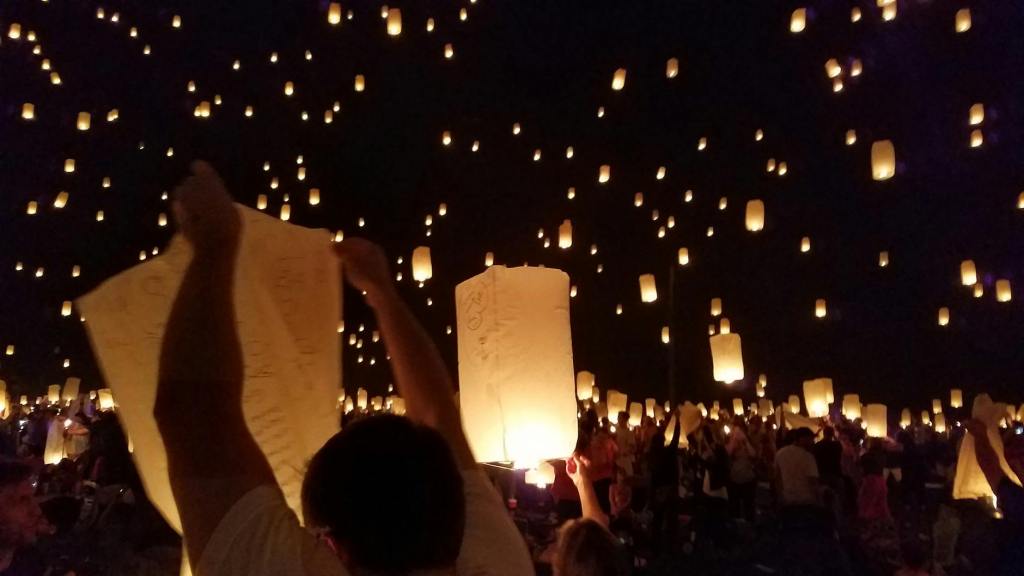
“Forgiveness is not weak. It takes courage to face and overcome powerful emotions.” – Desmond Tutu
For months I have been struggling to grasp the concept, to forgive and to forget. Despite attempts, the thoughts keep coming back to me and I start to develop thoughts that are negative, and sometimes vengeful ones. I thought I have moved on but why do these thoughts still come back to me? How do I be better and just, really, move on?
We have heard the saying, “I forgive, but I do not forget”. Yet, if I still hold on to that thought, does it mean that I have not forgiven?
A Mindful Practise
Part of my mindfulness practise, is not to cling onto thoughts and recognise that these thoughts are somehow there. Whenever these thoughts come into mind, I was clinging to them and letting them manifest in different ways. A self-indulgence thought, just making myself feel better but it has no values to serve me in any way, now or in the future.
Making a choice to not think about it, or to actually have an action to close off the chapter is key towards self-healing. To forgive, I always thought it to be a 2-way street, where if I chose to forgive, I would want the other party to forgive as well.
But the interesting thought is this – They may not care at all.
When I recognised that I am primarily seeking recognition to be forgiven, so that I can also do the same, my perception changed. I realised it is my personal choice to forgive, for my own selfish sake, for my own peace and harmony, and for my own to thrive and move. But the other party, may have already done so or I wasn’t that significant for them to continue thinking about me in the first place. Why would I then want to continue torturing myself?
“If someone criticised you for an hour, and you hold on to that for the rest of the day, that someone has effectively criticised you for the whole day.” – Unknown
Forgiveness is not Reconciliation
What if the mistake was not of yours? Situations like being bullied, being abused, being taken physical advantage of, or worse, having someone or something taken from you that caused you immense pain?
Forgiveness does not mean that you will ever have a relationship with that person again.
Realising that I do not need to seek reconciliation, is another revelation towards moving on. Reconciliation takes two hands to clap, and not forgetting, means I am not seeking a reconciliation. Furthermore, forgiveness is a one-man’s choice of action, without offering immediate reconciliation. And again, reconciliation being a 2-way street, also requires the other party to recognise their mistake in the situation. If they do not recognise it is a mistake or they are at fault, reconciliation can not happen.
What reconciliation could be, is a final step in the forgiveness process and it is a real sweetener. Reconciliation between 2 parties is a healing process that requires the repair of trust, for both parties. Most often than not, we want to seek reconciliation with people who matters – family, spouse/partner, close friends, people you respect. More importantly, you know it is your mistake and you are seeking forgiveness for that mistake of yours, not the entirety of the situation.
A Practise to Forgive
Despite all the concepts and ideas towards forgiveness, it can be hard when we do not have an actual practise to go about it. In my interactions with spirituality and healers, combining some of these practises can be useful.
- Get what you want, legally – While it is contrary to forgiveness and self-healing, if you believe that certain remedies like compensation is legally justified, get ahead with it. It is a medium to get back what you were owed, or deprived of. This is not a sign of being revengeful, but let the legal system give you a closure.
- Write down your grievances or mistakes on a piece of paper – Getting your thoughts and feelings written down is a therapeutic experience. Write everything without holding back on the a piece of paper, and you can go as long as you want. Let all the emotions and thoughts out, and not worry about grammars or spellings or even the tidiness of it.
- Stabilise your thoughts and emotions – After you have written down all that was associated with the person/s in that situation, take a mindful practise through breathing exercise. Breathe in with a count of 4, hold it for 8 seconds, and let go with a count of 4. Do this over a set of 4s.
- Choose forgiveness – After the breathing exercise, do a check of your feelings. You should be feeling more calm, more relaxed. Take another round of deep breathing, hold and exhale. This time, say out loud “I choose to forgive [who] for [action]”. If it is of self-forgiveness, say out loud “I choose to forgive myself for [action] from [who]. Will you, [who] forgive me?”. Do the same breathing exercise for another round.
- Burn away all negative thoughts and grievances – The last step involves cutting the connection. With calmness and tranquility, burn the paper that you have written earlier. Be sure to practise safety with fire at all times.
Final Thoughts
It takes a lot of time to heal and this period of time does not carry a real time stamp to it. It may take a few days, weeks or even years…
But realising that you need to move on, and you need to be open for better self-serving experiences, is key towards forgiveness.
“True forgiveness is when you can say ‘Thank you for that experience’.” – Oprah Winfrey
We all experience things and events in life. An aspect of positive psychology is recognising that these are singular events, not your identity, not your values, not you. You do not have to carry that burden throughout your life just because of someone else’s mistakes.
I wish everyone can heal and thrive, and realise that we often make mistakes. So do others.







 We live, we love, we strive
Leave a comment